Joanna Campbell Slan has moved, searching new blog...

Showing posts with label Love Is Murder. Show all posts

Friday, December 2, 2011

An Interview with Julie James: 'My Writing Process Is My Own'

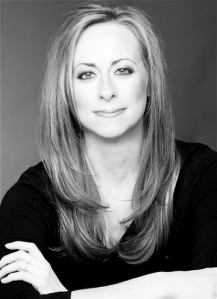
Julie James
My guest--Julie James.

Note: Each year I conduct interviews with famous authors who will be guests at various conferences. Julie will be appearing at Love Is Murder, Feb. 3-5, 2011, in Chicago.)
1. Julie, you were an attorney before you went into writing novels full-time. What is it about training as an attorney that seems to make for such fantastic authors? What did you learn in your work as a lawyer that you still use when you write today?


A. Maybe all us lawyers write simply to escape our day jobs? Kidding! (Mostly.) I think it’s a couple things. First, as a lawyer, you write a lot. Second, as a trial lawyer, your job in many ways is to tell a story—to take the facts and present them in a way that hooks the reader or listener (i.e., the judge or the jury) and convinces them to accept the story as you tell it. Plus, being a lawyer involves many hours sitting in front of a computer. Good training for a full-time career as a writer.


2. In the “traditional” romance novel, the hero and the heroine must be kept apart, usually by misunderstandings. You, however, do a fabulous job of throwing in one crisis after another that keeps your characters apart. Do you plot all this out in advance? How do you keep coming up with believable interruptions rather than the trite “misunderstandings” that blemish a lot of romance novels?

A. I actually find that the Big Misunderstanding isn’t used all that much in romance—at least not the ones I’ve read. From time to time, I’ll see a review of a book that uses the Big Mis as a device, and if it’s not done well readers will call an author out on that fast. That’s not to say you can’t have misunderstandings in a story—of course you can, we have misunderstandings in real life. But if your characters are smart, rational people, you can’t drag out a misunderstanding for too long that could be cleared up by one simple conversation.


In answer to your other question, yes, I do plot out my books in advance. I generally put together about a fifteen to twenty page outline of the book, which I use when writing a synopsis for my editor. But when I’m actually writing the book, I rarely look back at the outline. By that point, the book is developed enough in my head, and I want the freedom to deviate from the outline if that’s where the story takes me.

3. You say you think of your voice as “smart, sexy and sophisticated.” Your characters banter, and they crack jokes in such a way that the dialog reveals a unique voice. How did you find your voice? Do you ever have days when it doesn’t show up for work? If so, how do you reclaim it?

A. LOL, is that what I said about my voice? Apparently, my voice also includes being a little full of myself. : ) I actually wrote screenplays before I began writing novels, and my books certainly tend to be dialogue-focused. My characters are usually somewhat on the sarcastic side. Perhaps a lot on the sarcastic side. And typically there’s a lot of back-and-forth banter between the hero and heroine.

Do I ever have days where my voice doesn’t show up for work? Hmm. . . I’d say not really. But that doesn’t mean I don’t get stumped. Sometimes I’m trying to do something with a scene that just isn’t working, sometimes a plot point isn’t developing the way I want, or sometimes I struggle with getting the tone of a scene right. But my voice, so to speak, is typically there.

4. You went to your first RWA convention prior to becoming a published author. Most folks won’t “pop” for a conference until they have a book. What was your thinking? Was it of value to you? Would you recommend other pre-published authors attend conferences before they have a book in hand?

A. I was pretty unfamiliar with the romance genre until I’d learned from my editor, after selling my first book, that I had, in fact, written a romance. (I’d called the book a “romantic comedy” when we sold it.) So for me, it was valuable to attend the conference simply to familiarize myself with the genre. Also, I think conferences offer great networking opportunities—I met several authors at that first conference with whom I continue to be friends. And there are a lot of helpful workshops at these conferences for both published and unpublished authors—I still attend workshops, even though I’ve written five books and now present workshops myself. There’s always room to learn more.

So bottom line, I think attending conferences can be very valuable, and I do recommend them to pre-published authors—IF it’s financially feasible. Let’s be honest, these conferences often aren’t cheap!

5. You are a big believer that “action speaks louder than words.” How do you come up with the right actions to reveal your character’s inner worlds?

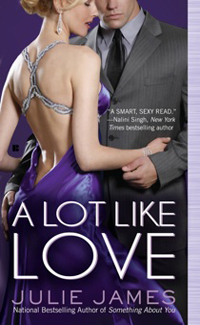
A. Hmm, did I say that somewhere? I mean, sure, I believe that—particularly with my characters, who often use sarcasm to deflect their deeper emotions. I’ll give you an example—in my most recent book, A Lot Like Love, the hero (an FBI agent) and the heroine (a billionaire heiress who owns a wine store) have to pretend to be a couple as part of an undercover sting operation. Now, they say they don’t like each other— and there’s a lot of back and forth banter and sarcasm between them. But the hero stops by the heroine’s wine store one night, and sees that her store is so crowded she hasn’t had time to take a break and eat dinner. So he leaves and comes back with a Portillo’s burger and cheese fries for her. And sure, he grumbles through the whole thing and makes all sorts of wry comments about how billionaire heiresses probably don’t eat cheese fries, and how she’s too thin already, but regardless, the actions speak for themselves—she was having a rough day at work so he went out and got her dinner. Even if he’s sort of cranky about it, it’s still romantic.

6. I think you write the BEST sex scenes of any author I’ve ever read. They are hot without being gross. Care to share tips on how to do a scene that sets the reader’s pulse racing without grossing her out?

A. Thank you! And… I’m kind of wondering what books you’re reading where the sex scenes are gross. Because that’s not good for anyone. : )

Honestly, one way I think you can make a scene instantly hotter is with dialogue. A few good old-fashioned dirty words, when well-timed, can get the pulse racing. Also, one of the key things is that the sex scenes need to be a continuation of the characters’ relationship. Meaning, if the hero and heroine have been trading all sorts of quips and banter throughout the book, well, they should continue that playfulness, that teasing, in the bedroom as well. No matter how descriptive, those scenes should be about the emotions the characters are feeling. Heck, even if it’s a one-night stand, and all the guy is thinking is “Oh my god, yes—I’m getting laid!!, well, that’s the emotion you need to convey in the scene. Sex is intimate, and people are (literally) exposing themselves and making themselves vulnerable to another person, so there needs to be some sense of what’s going on in the characters’ heads.

7. Please talk about the differences between the romance market and the mystery market. Is one more important to you than the other? How are the fans different?

A. Candidly, I’m not that familiar with the mystery market. But I’ve written two romantic suspense novels, and I’m sure there is some crossover. What I can say is that romance readers tend to be extremely voracious readers, and I’m truly appreciative that my books have been so well-received by fans of the genre.

8. Go back in time and talk to Julie before her first book was published. What would you say to her?

A. Oh gosh, this is like the, “What would you say to yourself if you could go back to high school” question. I’m always terrible at these types of questions. I don’t know that I have some great, deep answer so instead I’ll give a practical response. One thing I wished I had known before I was published was how much promotion authors need to do themselves. That would not have changed my decision to write—not at all—but I was pretty clueless after selling my first book when it came to marketing. So writers should be aware that this job does, in fact, involve more than actually writing.

And here’s something perhaps a little deeper: I think I would tell myself that my writing process is my own, and not to worry about how other authors write, or—more specifically, how fast they write. I tend to be a slow writer—I do a book a year in a genre in which many authors write two or more books a year. So I’m constantly reminding myself that it doesn’t matter how fast I go—what’s most important is that I’m pleased with the outcome, regardless of how long it took me to get there.

Learn more about Julie by visiting her website: http://juliejames.com/

Friday, July 15, 2011

Accept the Restrictions: An Interview with Donald Bain

Note: Donald Bain will be a featured author at the 2012 Love Is Murder Mystery Conference, Feb. 3-5 in Chicago.  I interviewed him for the LIM newsletter.

1. JCS--You are in the unusual position of writing in partnership with someone who doesn’t exist, Jessica Fletcher. Angela Lansbury told me that she was in your publisher’s offices and someone complimented her on her book series. She told them, “But I don’t write those books.” Obviously, your unique situation is confusing. Care to comment?

DB--Because many of the 110 books I’ve written were ghostwritten for other people, I suppose that “collaborating” with a fictitious TV character isn’t so unusual. Giving us a dual byline was, of course, a marketing move by the publisher. When I make appearances there sometimes are people who are disappointed that I’m not Angela Lansbury (I apologize to them for not wearing basic black with pearls). And there is at least one fan who is really confused. She e-mailed me to say that she was amazed how much Jessica Fletcher looks like Angela Lansbury. Angela has told me the same thing that she told you, that she’s been stopped in airports and on the street by people who thank her for having written the books. She always graciously thanks them for their kind words and moves on. So far the confusion hasn’t negatively impacted my relationship with Jessica; at least I don’t think it has.

2. JCS--Your first Jessica Fletcher book came out two years before the series ended. What are the challenges of writing a book based on a TV program? Fans can get pretty snarky if an author messes with the perceived canon of an icon. Did that worry you? Did you ever have any problems with that? What advice might you share with someone who wanted to write about a pre-existing character?

DB--You’re right, of course. Writing a media tie-in book poses certain problems, but none that can’t be overcome. I owe it to fans of the “Murder, She Wrote” TV show to be faithful to the Jessica Fletcher character, as well as to other characters and to the tone of the series overall. Before I started writing the first novel 22 years ago I watched as many episodes of the show as possible, and didn’t commence writing until I felt confident that I had all the nuances down pat. Even then I missed a few. For instance, I didn’t pick up on the fact that Jessica doesn’t drive a car, and had her behind the wheel in the first book, Gin & Daggers. And there have been other slips, although they’ve become fewer as I continued writing the series. (There are now 37 books and a new 3-book contract. Remarkably every one of them is still in print).

My advice to writer who might end up basing a novel on a pre-existing character is to accept that there will be restrictions on what you can have that character do and say. Having been handed a wonderful character like Jessica Fletcher, who was created by others and given life by Angela Lansbury, is a gift for which I’m thankful. On the other hand it is limiting to an extent because I can’t deviate from that character’s basic nature, philosophies, likes and dislikes. It’s a trade-off that I’m perfectly happy with.

3. JCS--Under your direction, Jessica has gone to some pretty nifty places like Moscow and Manhattan. She’s done some way-cool things—and I know that you always do a site visit. Tell us a bit about how you do your research. Your wife Renée is involved. Tell us about how she helps you with your research, please. In SKATING ON THIN ICE, you shared the sort of insider info on skating, learning to skate, etc., that all authors dream of scoping out. Any tips on going beyond the superficial information?


Renée and I are true collaborators on the series, and have been for the past dozen or so books. We research the books together, brainstorming where to set the next book, and arranging travel to those places, which includes appointments with local law enforcement officials, politicians, local characters whose lives might lend color to the story, and others who can provide an interesting slant. We travel with cameras, a tape recorder, and notebooks and try to nail down everything about the setting as possible. Our readers expect details to be accurate, and we strive to achieve that. Of course we also turn to the best travel books and the Internet as other sources of information.

The research for SKATING ON THIN ICE came primarily from Renée’s lifelong love of figure skating and the many other skaters with whom she’s been involved. She skates a few times a week and interviewed her skating instructors, rink operators, Zamboni drivers, and anyone else who had something to add to the story.

To answer your final question about tips on going beyond superficial information, I suggest that when researching factual material for a novel that you seek the answers in the children’s section of the library. Too much information bogs down a good story. What’s contained in children’s books on any subject gives the writer just about the right amount of background to weave into the story.

4. JCS--Some authors are highly resistant to work for hire or using a pen name. Forgive me if I misunderstand your position, but is the Murder She Wrote series work-for-hire? If so, what suggestions can you make for any writer considering work-for-hire? If it is not, would you please educate me about what it is? It looks like there would be obvious upsides and downsides to your situation. Dish.

DB--The term work-for-hire denotes a writing assignment that involves a flat fee payment, without financial participation in the project. I’ve done those, especially earlier in my career, and would do others provided the flat fee was large enough. “Murder, She Wrote” is not a work-for-hire project; I participate in royalties from all the books. Having a financial piece of the action serves to motivate a writer, although too many projects are offered in which the up-front money is small on the premise that the writer will get rich on the back end. When one of my books, COFFEE, TEA OR ME? was published back in the 60s it was a runaway success and generated numerous motion picture offers. It also spawned an offer to turn it into a Broadway musical comedy by stage luminaries Anita Loos and Jule Styne. They offered a small advance with a generous financial participation if the show was a success. I opted for the bigger up-front money from (because I needed it), and have regretted the decision to this day.

Writers accept work-for-hire assignments because they need the money. That’s all there is to it.

5. JCS--You advise authors to develop a strong storyline. What’s your process? How detailed is your working outline?

DB--“Story” is everything in a novel. Assuming that a novelist can write coherently and correctly, the story that he or she wants to tell becomes paramount. All the good writing in the world can’t salvage a poorly conceived and constructed plot. Renée and I come up with a storyline of about six or seven pages before starting to write, and then watch as the story begins to deviate from the original outline. We discuss each scene before it’s written. At the same time we keep going back over what we’ve already written to refine, add salient material, and ensure that the plot is staying on track. We don’t develop a long, detailed outline before writing. Some writers do, and need it. We prefer a looser storyline in which we know how the book will start, where it will go in general terms, and how it will end. But even then we find that what we considered solid major plot points change as the story progresses.

6. JCS--You have written a variety of genres, as well as non-fiction. (Can a genre be non-fiction? Hmmm. I don’t know!) Writers are typically told NOT to do that. But obviously, you’ve been very successful. Were you ever warned off of writing in different genres? What skill set stays the same no matter what you write?

DB--Good writing is good writing no matter what the genre. I disagree that a writer shouldn’t switch genres. Having to address a different sort of book after writing another type can refresh and reinvigorate a writer. I learn from everything I write, be it a western, murder mystery, historical romantic novel, business advice book, or comedy. To me being a professional writer means being able to do just that. But a writer must also be realistic when choosing assignments. For instance I would never agree to write a book about finance because I find that topic daunting and beyond my ability to absorb it. I’m also careful to not lend my name and writing ability to the sort of book that would turn off readers of the “Murder, She Wrote” novels, who appreciate the series’ lack of explicit sex, gore, and foul language. We receive many e-mails from teenagers who enjoy the novels, as well as from parents who use the books to jump-start their children into a reading habit.

7. JCS--You’re a proud graduate of Purdue University, as was my father and my sister. Purdue isn’t usually the first school that springs to mind when people think of a launching pad for authors. Comment?

DB--Hail Purdue! When I went to Purdue I never intended to be a writer. I went there because of its excellent educational radio and TV program, and worked in that field before turning to writing. What Purdue gave me was a sense of a larger world and the people who inhabit it, and I love going back each year to lecture to creative writing students.

8. JCS--Mr. Bain, you and I are the only two people I know who are fiction writers and who have won Silver Anvils. How did your work in PR help prepare you to become a successful author?


DB--Everything in my life has helped prepare me to become an author—being a salesman, my three years as an officer in the Air Force, performing as a jazz musician, working in radio and TV, learning to fly—and my years as a PR executive, primarily in the airline industry. Everything gets used when I write. My PR experiences brought me into contact with a wide variety of people, always a good thing for a writer. It also sharpened my ability to explain concepts and things in writing. And, of course, it has helped tremendously in marketing my own books.

For more information about Donald Bain, visit his website.

Thursday, February 3, 2011

Humans Are More Alike Than Different: An Interview With Michael Dymmoch


Michael Allen Dymmoch will be the Local Guest of Honor for Love Is Murder 2011, held in Chicago, on Feb. 4-6. For more information, go to Love Is Murder.


1. I know that Michael Allen isn’t your given name. Tell us about why you decided to create your own identity and how that influences you as a writer who creates identities on paper.

I prefer not to answer questions about my name beyond saying that your real name is the one you make for yourself.


2. In your Jack Caleb and John Thinnes Mystery series, Jack is a fascinating character who is unusually candid about being a gay man. He even wishes at one point that he felt lust for a woman. You also explore his concerns about dating. How do you keep that candor? What skill do you call upon as a writer to find that ringing honesty?

Write what you know is a cliché because it's true. I would amend it to add or what you can learn. We're all able enjoy stories about people of different genders, times, and orientations precisely because humans are more alike than different in our fears, longings and aspirations--we all want love and work. Bringing Caleb to life was simply a matter of research applied to my own experiences. I know what it's like to be in love, to miss someone so much it hurts, to obsessively desire a man, to dread dating. Therefore, so does Caleb. Caleb is a good shrink because he knows himself. He's open about his sexual identity because he understands openness to be a position of power, and he knows that remaining in the closet invites misunderstanding and blackmail.

3. In the same series, moving in concert with the plot, the characters have these scenes that are mini-short stories, complete with other characters, conflict and resolution. For example, John breaks into his in-laws’ car in such a way that it’s a rebuke to their classism. How do you construct these interludes?

I try to tell the character's story in a way that integrates it into the larger narrative. Some readers (and reviewers) don't get that life is a collections of short stories connected by the memory of the person whose experiences they are. Sometimes the memories are retrieved intentionally and in chronological order, sometimes evoked at random by external stimuli.


How do they come to you? How do you position them so they don’t slow the action down?

Again, writers use their own experiences. I've encountered people like Thinnes' in-laws and his supervisor, Rossi. One of the best things about being a writer is that you can kill people who piss you off without ending up in prison. Or you can put them into situations that show just how badly they behave without getting yourself fired. Also writers steal stories and transform them into tales of their own, which--as Stan Brakhage pointed out--is not unlike taking someone's car, slapping on a new coat of paint and different license plates, and having it for yourself. I love stories. I squeeze small stories into larger ones for the fun of it and because vignettes illustrate character in a way that just saying "Thinnes is a good guy and a cynic" can't.

As for not slowing the action, the story is the thing. As long as they don't derail the story, short stories within the main are like scenic detours in the general direction of your destination.

4. “Jack” is a nickname for “John.” Clearly, names are very important to you. Was there some reason you gave these two very different men the same name? Do they represent different sides of masculinity—the more traditional expectations and the less accepted ones?


Actually, I didn't think all that carefully about those characters' names. Caleb's nickname is Jack because his initials are JAC- Jack is simply the popular spelling of the phonetic pronunciation. The Man Who Understood Cats was originally written as a screenplay which I novelized when I couldn't interest anyone in the script. It was intended to be a cop/buddy film, so the cop was a given--straight, middle class, modestly educated. Caleb became rich, well educated, a shrink, and gay because that combination of characteristics seemed most likely to create conflict--the essence of story. Also I was well educated in the sciences and could research rich and gay. If I'd envisioned a series, I probably wouldn't have been so ambitious.


5.You write with such a sure sense of being a Chicago insider. I’m thinking about the mallard that the police protected and how the building codes invite graft. Tell us about your love of the Windy City and how you collect such anecdotes/information. (I know you’ve been through a citizen’s academy, so maybe tell us about that?)

Stephen King taught me the trick of adding just enough detail to let the reader fill in the rest. Living in Chicago helps, but newspaper and TV coverage of the city (especially by Chicago Tonight and other great WTTW programs), are a godsend. (A duck actually did hatch her eggs at Western & Belmont, protected by cops and crime-scene tape, and covered by several local TV stations.) I also get material from walking and driving around the city and riding the CTA--stuff you can't make up (like the time a motorman stopped his Brown line train to jump out and extinguish a fire on the tracks. I've got pictures!) Police Departments have also been marvelously helpful. Once they're sure you're on the level, not crazy or a crook, and you'll keep it off the record when requested, they're usually happy to share their tales. And cops are great story-tellers. Most departments also have a public relations office or officer. Northbrook's Michael Green spent an hour telling me how his Department worked, And Pat Camden of Chicago PD's News Affairs spent two hours talking to me, then hooked me up with an arson investigator who answered questions I never thought to ask. I've also attended autopsies; and seminars on gunshot and stab wounds, toxicology and forensic science--all of them given by people with great stores to steal --er, tell.

6. “Writers say that what sets them apart from nonwriters is a sense of isolation, and a feeling of being different from others, of always standing apart, observing.” Talk about that. Explain how you stand apart and whether you’ve cultivated that sense of distance.


Another cliché firmly grounded in fact. I always felt isolated and different as a kid--an ugly duckling. When I discovered the writing community, it was obvious to me that I'd been flying with the wrong flock.

7. MIA, your most recent book, is entirely different in tone from Death in West Wheeling and the Caleb/Thinnes series. It’s a combination coming of age novel and a love story. You clearly don’t worry about genre-hopping. What inspired you to write MIA?


I saw an M.I.A. bumper sticker on an old rusty car driven by a man too young to be a Vietnam vet or the son of one. I wondered about the sticker--Did it come with the car? Was a relative M.I.A.? Was the young driver a history buff? Since I couldn't catch up to him to ask, I made up my own story.

An earlier novel was also inspired by a motorist. Driving to work one morning--late as usual, I nearly collided with a car backing out of a driveway hell bent for election. Being a mystery writer, I immediately decided the driver must have committed a murder to be in such a hurry so early in the day. That--considerably embroidered--became the opening sequence of The Fall.

Also, you have nearly the same line in MIA as you have in The Death of Blue Mountain Cat. “The way humans is made, you can’t take care of somethin’ without comin’ to love it or hate it.” (MIA) “Humans can’t remain neutral about anything they give their time or labor to. Whatever we take care of, we either come to love or hate.” (The Death of Blue Mountain Cat) Tell us about why this idea resonates with you.

I guess I just find it to be one of those endearing (or maddening) facts about human beings that fit into both novels (as well as one I'm working on now).

How does a writer use this idea to develop character?

As you illustrated in the above quotes (by telling) or by showing how caring for something brings the character to love it.


8. You reference Groundhog Day in Death in West Wheeling, and Terminator and Starman to name just a few in The Death of Blue Mountain Cat. Are you a big movie fan? How have they shaped your work as an author?

Big fan of Shakespeare's tragedies and many dramatic movies and police series. Screenplays are like short stories and they can be very good outlines for novels if you understand the difference between showing and telling. Screenplays also have a structure that helps keep the story from meandering off point.

**

Michael Dymmoch was born in Illinois and grew up in a suburb northwest of Kentucky. As a child she kept a large number of small vertebrates for pets and aspired to become a snake charmer, Indian chief or veterinarian. She was precluded from realizing the former ambitions by a lack of charm and Indian ancestry and from the achieving the latter profession by poor grades in calculus and physics. This made her angry enough to kill. Fortunately, before committing mayhem, she stumbled across a book titled Maybe You Should Write a Book and was persuaded to sublimate her felonious fantasies. Moving to Chicago gave Michael additional incentives to harm individuals who piss her off. On paper of course. Author of nine novels, Michael Dymmoch has served as president and secretary of the Midwest chapter of Mystery Writers of America, and newsletter editor for the Chicagoland chapter of Sisters in Crime. Michael is a Chicago resident and charter member of the Chicago Mystery blog, The Outfit Collective http://theoutfitcollective.blogspot.com/

Saturday, December 25, 2010

I Start Knowing Nothing: An Interview with Rhys Bowen


Rhys Bowen will be appearing at the Love Is Murder Conference in Chicago, Feb. 4-6, 2011. For more information go to www.loveismurder.net


1. Murphy’s Law starts with a wonderful first sentence: “That mouth of yours will be getting you into big trouble one day.” In fact, all of your books start with a super first line. Any hints about how you make that happen?

I spend a lot of time thinking about the first line. I think it’s so important where you come into a story. Murphy’s Law doesn’t start with a high drama scene. It starts where she’s poised between two worlds. Getting a fast start is more important now than ever because so many people are buying books online. If you don’t come up with a good first line you’ve lost those readers.


Today’s readers are not going to wade through pages and pages of details like they would in the past. No one has the time for that anymore. Everyone has been raised on TV, and that comes in 90-second bites. So deciding where to come into a story is important.

2. Tell us about your process. You do a terrific job of giving backstory while in the midst of an action scene. How do you do that?


It’s going to sound awful, but I start knowing nothing, or the least little thing. For example, I’ll think, “Wouldn’t it be fun to have Lady Georgie going to a wedding in Transylvania?” Then I plot maybe 20 pages at a time. But that’s all. I’m not a puppet master making my sleuth do this or that; I’m following my sleuth and seeing where she goes.

I’ve tried working from an outline, but it doesn’t work for me. When I finish the outline, I think, Oh, I’ve finished with that book. I’m terrified for the first half of every book, and I’m writing scared. When I get to the middle and I start to see how things are taking shape, I start to relax a little.

3. How do you plug in the backstory?

Giving the reader a big dump of backstory is the mark of a beginning writer. It’s more fun to give people hints. For example, at the start of Murphy’s Law, you know Molly is out of breath and her bodice is ripped but you don’t know why. Really it’s like when you are watching a movie and you see a hint of something dashing across the screen. You stop and think, “Oh! What is that?”


So the trick is to keep filling people in, while at the same time you are moving them forward, and not slowing them down. Less is always more with writing, so give the reader the least hint possible you can. My writing is quite spare. I don’t add a lot of description.


4. Both Molly and Georgie, your two protagonists in your two series, recognize that being financially dependent on anyone is the absolute pits. Where does that come from? Is there something in your life that makes that resonate with you?

I’ve been lucky enough to have a husband who is good with money, but I’ve had friends who are not so fortunate. Writing historicals, I’ve noticed that when women had no money, they were completely at the mercy of a man. That’s the way the laws worked, and that was not only true in the 1900s, but you can look at the I Love Lucy episodes and see it. There’s that one where Lucy was terribly afraid to tell Ricky she’d bought a new hat!

My own mother worked as a school principal. She had her own bank account. She made her own decisions, and I learned from her that having your own money allows you to be independent. So I guess that’s my own life coming through.

It’s funny. I’ve written a lot of books but these are the first characters, Molly and Georgie, that I’ve seen myself in, although I didn’t start out with that intention.

5. Speaking of women and their roles, tell us more about Sid and Gus. Were they modeled after Alice B. Toklas and Gertrude Stein? Are they lesbians?

Alice and Gertrude--I didn’t even think of that until you suggested it. I could have a lot of fun with that, but no, they weren’t. Sid and Gus are the epitome of what free women can undertake, what sorts of life they can live, when they have no financial restrictions. And, yes, they are lesbians. You can imagine what might happen to a lesbian couple if they weren’t financially independent. However, in Victorian times, a romantic relationship between women wasn’t frowned upon at all. In fact, it was considered rather sweet for two women to walk down the street holding hands. It was thought that women would grow out of their attachment to each other. And I wanted to portray Sid and Gus as a true Bohemian couple of the times. (And I would have liked them as my next door neighbors.)

6. You’ve collected tons of awards. Tell us what these mean to you.

One thing I can tell you is that it never gets old. Some people get terribly blasé, but I’m always absolutely amazed every time I win, because I know every year that there are a good number of books that were fantastic. I put my awards on a big shelf by my stairway, and I have to see them as I go up and down stairs every day. When I have a depressing day I think, “Oh, well, I have those.” You know, being an author is such a roller coaster ride. One day you click on Google and someone’s said something unkind about your work. The same day, there’s this fantastic interview.

I think we all need to be told all the time that our work is good. When I send a book out to the publisher, I wait to hear back from my editor, “This is good!”What you’re doing is putting out the best part of yourself each time.


**

Rhys Bowen’s most recent work, Royal Blood, will be out September 7th. To learn more, visit her at www.rhysbowen.com


Wednesday, October 27, 2010

I'm a Researchaholic: An Interview with Joe Finder


Joe Finder will be appearing at the Love Is Murder Conference in Chicago, Feb. 4-6, 2011. For more information go to www.loveismurder.net


1.Unlike most action oriented books, your settings are not exotic. Often the scariest scenes occur in office buildings. Many authors rely on dramatic settings. How do you manage to make such commonplace settings still seem frightening?


The familiar is what we identify with most, and we need to identify with a situation before we can be frightened. Alfred Hitchock understood this. He was the master of taking the ordinary man in the commonplace setting, and turning it into something tense and unexpected. That tension, that fear happens when something disrupts the familiar: the thing under the bed, the noise on the stairs. That’s what I’m interested in.

2.Your hero/ine is often a sort of “every man” or “every woman” who is discounted by others. Why does this type of character appeal to you? It would seem that the pitfall would be a character who is too bland or boring to hold the reader’s attention, and yet your characters are compelling…even if they are slackers. Please comment. Also, you seem to include male characters who are amazed that they’re loved by smart and attractive women. This goes contrary to many male fantasies of being irresistible. Tell us about that.

I think the “everyman” is the ideal protagonist for a thriller, again because of this question of identifying with the hero. I also love the idea of the underdog, the person the reader wants to root for because everyone else seems to underestimate them. Nick Heller can be beaten, and because we know that, the stakes are higher. It’s much more exciting for the reader when he overcomes those obstacles.

Men might pretend to think they’re irresistible, but I’ll let you in on a secret: most of us know that’s a fantasy. Most men have no idea why any woman would find us attractive. Life’s not an Axe commercial. I think both men and women appreciate a more realistic approach.

3. Your books are full of tension and suspense, but it comes from events most of us might imagine ourselves in, such as snooping around in an office where we don’t belong. Or getting caught in a lie. You are a master at upping the stakes and amplifying the threat. How do you do that?


All of my anxieties feed my twisted imagination, or maybe it’s the other way around. I imagine myself in a given situation and ask, “What’s the worst thing that could happen?” Then I play out the scenario in ways that will challenge the reader’s expectations. If a reader thinks, “Oh, I know where this is going,” but something completely different happens, that’s exciting, that’s thrilling.

You have to start with a character the reader cares about, and then put them through a sequence of events that escalate, with moments of real tension — cliffhangers — in between.

4.You write with great precision about technical situations, such as how cargo planes are managed, how corporate secrets are stored, how stock issues and buyouts happen. You list a lot of experts as resources. Please talk about how you do your research. Do you do it all upfront? Or in stages? Do you interview people or ask questions as you go along? Have you ever be headed down the wrong path and then discovered, because of your research, that you needed to rewrite a chunk?

Research my favorite part of the process. I love research. I’d go so far as to call myself a researchaholic. I need to keep myself from overdoing it, because the easiest thing in the world is to put off writing while I check one last fact or interview one more source. Usually I’ll start with a general idea of setting and plot, but the research will shape the setting, and also provide plot ideas; I’ll ask someone, “What could go wrong? And what would you do then? And how could that go wrong?” The big research happens at the beginning of the process, and I’ll gather enough information to get the engines going.

Once I start writing, though, questions about details inevitably come up. I’ll keep track of them as I go, and call or email my sources during breaks in the writing to get answers. So far, I haven’t had to go back to correct something because I learn it’s not feasible. I’ve usually done enough research in advance to give me a pretty good idea of what works and what doesn’t.

5.What’s your process? How do you come up with your concepts? Do you outline? You have a lot of twists and turns, and you manage to end many chapters with cliffhangers. Do you plan these in advance?


Everything starts with the “what if?” question. What if my new neighbors were actually spies? What if someone started taking those “business is war” books a little too seriously? What if the entire leadership structure of a shaky company were taken hostage?

From there, I start populating my scenario with characters. Who’s my hero? Where does he or she come from? What does he or she want? Who and what are the obstacles to this desire?

Then I brainstorm the major “beats” of the story, creating a beat sheet that lays out the major plot points of my story. I don’t get too detailed, because I need to figure a lot of it out along the way. If my outline’s too detailed, I’m bored before I even begin.

I follow the basic formula of “surprise, reverse, reveal.” We start with situation A, which suddenly becomes situation B — except it’s actually C, which turns out to be D. It’s like peeling the layers of an onion, and sometimes — actually, often — I surprise myself. I don’t always know where the cliffhangers turn up, and the ultimate resolution often doesn’t reveal itself to me until I’m writing it.

6. Your book “High Crimes” was made into a movie. You were able to make a cameo appearance and spend time on the set. Talk about the difference between a movie and a book. (You did this eloquently in the interview during the movie trailer, so if you could repeat that here, that would be great.)

My big discovery, in watching HIGH CRIMES become a movie, was how much more scope I had as an author than screenwriters or even directors do. I can develop characters and storylines in a 500-page novel that filmmakers can’t hope to convey in 120 minutes. They just don’t have the time or the space to create the kind of world I try to build in each book. Authors can form relationships not only with their fictional characters, but also with their readers, because of the time it takes to read a book. Even a fast-paced thriller is going to take at least a day to read. At the end of that time, the reader feels a connection to me that I think it’s hard to feel with the director of a film.

Beyond that, I had a new appreciation for the absolute control I have, as an author, over my plot and my characters. Filmmaking and television producing are collaborations, and those collaborations create marvelous things. I can feel the excitement and the attraction of being part of that kind of collaboration, but they’re no substitute for the thrill of being able to sit at a desk alone and create my own stories from thin air, with no one to answer to but the reader.

That said, I think authors can learn a lot from the movies: the importance of having your reader identify with the main character, the need to start as late in the action as possible, the deadly effects of over-narration. I want my books to feel like great movies, but deeper, and more nuanced.

7.Your first book at age 24 was a nonfiction account of the ties that Armand Hammer had with the Soviets. For that, he threatened to sue you. How did you cope with the stress of that? What lessons did you take away?


I loved doing the research, making those discoveries, and putting it all on paper. I didn’t love the controversy. What I learned was that I could still do the research, still make those discoveries, still put it all on paper — but I could do that and actually make the story up, rather than being constrained by the facts.

The research I did for RED CARPET became the foundation of my first novel, THE MOSCOW CLUB. I discovered that I could use even more of my research, in a way that was more creatively interesting, if I turned it into fiction. It was a revelation.

8.Talk about the time in your career when your agent suggested you might have to write under another name to “redeem” yourself. What kept you going? What did you do? What did you learn?

Almost every author I know has had times when something went wrong in the publishing process, where sometimes external issues created obstacles an author had no control over. I didn’t want to write under a different name. Instead, I took a break and did other things, and I took a broader look at the genre I was working in.

I saw what John Grisham was doing, setting his stories in law firms, and noticed that no one was setting thrillers in the everyday working world, the place most people live. I saw that the old 1970s conspiracy stories could be played out in today’s business world — in an office environment that looked ordinary to an outsider, but might have secrets buried within.

So I came up with a new “what if”: what if all those old spy techniques — the moles, the leaks, the theft of secrets, the double agents — were being used in today’s high-tech corporations? And what if an ordinary guy — the Hitchcock hero, someone the reader could identify with — got pulled into one of these operations?

The result was PARANOIA. It took me a couple of years to research and write, and when I was finished I felt that it was something truly new, and something I’d be proud to put my name on.

9.Your agent also told you that humor was incompatible with suspense, and you’ve obviously ignored that. Your humor contributes to your characters and gives the reader a nice change of pace. Tell us why you didn’t take your agent’s advice on dumping the humor.


This was another piece of advice I decided to ignore when I wrote PARANOIA. At that point, I felt I had nothing to lose by letting my own voice come through — and that voice, often as not, is the voice of a smartass.

But again, the humor is part of how my protagonist stands in for the reader. When I first started researching PARANOIA, I walked into Cisco Systems and it was like visiting a foreign country. All this jargon was flying through the air, words I’d never heard before, like “bandwidth” and “pushback” and “escalation.” Humor was a natural reaction to that kind of information overload, not only for Adam but for me, and for the reader. Especially when you’ve dropped a character into a strange and complicated situation, humor is a way to reassure the reader that the characters are taking it all in stride, and they should, too.

10.You grew up as a “third culture” kid, a child who spent several years as an expat. Research has shown that “third culture” kids are more curious, more adventuresome, and more accepting of diversity. They tend to get bored easily. Given that many Americans don’t even own a passport, what could you say to encourage Americans to travel and experience other cultures?


This is a really interesting question. What I would say to Americans is that the world is a mansion, and we live in only one room. There are many ways to open the doors to that room, and travel is only one of them.

When you move a lot, you get used to paying attention to new situations. It teaches you to be an observer, to ask questions, to figure out what you need to know. Those are essential skills for a writer.

I’d certainly encourage Americans to travel, but I realize that it’s not always possible, given time and money constraints. That’s one of the great things about books: they let you experience cultures and identify with people whose values might differ. As many places as I’ve been, one of the best trips I ever took was Eleanor Cameron’s The Wonderful Flight to the Mushroom Planet, which I read as a kid. That was the book that first made me want to be a writer, and I might have found it even if I’d never traveled anywhere.

Friday, September 24, 2010

Interview with Joan Johnston


Note: Joan Johnston is one of the authors who will be appearing at Love Is Murder, Feb. 4-6, 2011, in Chicago.

1. Joan, you are an incredibly prolific writer as well as a successful one. Tell us about your habits as an author. Can you share any tips for staying focused and productive? You’ve said you write one book at a time. Do you work on other ideas, but only write one at a time? It seems like you must have a lot in the hopper, as well as what you are working on.

I'm currently working on a five-book series called the Benedict Brothers for Mira. The first book of the series, Invincible, will be in stores October 26. The next book in the series, Unforgettable is due October 1. I also just signed a three-book contract with Ballantine Bantam Dell to write a series of historical westerns call the Mail Order Brides. I've been thinking about the western historicals while I work on this contemporary series with a suspense element, but I only write one book at a time. I'm always writing in my head.

I sold my house and moved in August, so staying focused on writing has been a challenge. But I love writing books in a series and want to be sure my novels (both contemporary and historical) are the best they can be. So the secret to being focused and productive is . . . keeping the seat of the pants to the seat of the chair. Being prolific (I'm on a three-book-a-year schedule right now) really is about putting in the time to do the work.

2. You describe your latest books as “romantic suspense.” Could you define that term? How are these books different from your earlier romances?

In a romantic suspense, as opposed to a romance, the suspense is more than just a device to keep the characters together in the same place. I write suspense rather than mystery because I'm not good at keeping secrets. Usually the reader knows who the villain is in my books. The literary question is: Can the hero and heroine, through their combined efforts (that's the romance part), keep the villain from prevailing?


3. Your fans clamored for you to continue the saga of the Bitter Creek characters. The cast is staggering. How do you keep all that straight? Please share any suggestions for plotting and character development. How do you keep all the names straight?

Characters become real people when you write about them, so they're easy to tell apart. But the truth is, I do make mistakes. Readers are quick to point them out.

One of my favorite reader "catches" was the fact that in The Cowboy (first book in the Bitter Creek series) Trace and Callie had a three year age difference, even though Ren was supposedly pregnant with Callie at the same time as Eve was pregnant with Trace. That led to some serious finagling on my part--and a fabulous storyline that resulted in a lot of powerful scenes in later books in the Bitter Creek series (especially The Texan and The Loner).


4. You are obviously good at branding yourself. How did you nail down your brand? What has helped you clarify who you are? How does it help you promote your books?

I've written a lot of the same kinds of books--powerful family dramas--even though they may be historical, contemporary or contain suspense elements. The logo "Escape with Joan" came about when I was looking for a specific brand that I could use to describe the experience I wanted readers to have with my books. I began reading to escape from the stresses in my life, and in this challenging world we live in, that's the escape into adventure and romance that I hope to provide for my readers.
In purely practical terms, it also helps to use the same size and font for your name on the cover, and to have some continuity in the look of your covers. I've been lucky to have long-standing relationships with publishers (Ballantine Bantam Dell, Harlequin, Pocket Books and Avon) who've maintained a Joan Johnston "look."

5. Your publication story is unusual. You went straight to two editors and asked to meet them in New York. Do you think that could happen today? And you are very clear about reading the genre and taking classes before trying your hand at a book. What advice would you give unpublished authors based on your journey?

I still think it's possible to meet an editor at a conference, make a connection and then submit your work directly to that editor without going through an agent. However, for this route to work, you need to have written a book that's publishable without a lot of editing. In other words, the onus is on the writer to know the genre (hence, the rigorous reading I recommend) and have some idea where his or her work fits into the needs of the publishing house to which he or she is submitting.

Which means, if you want to write for a particular house, you need to be reading everything that house is publishing in the genre in which you want to write, so you'll know what they're currently buying. Remember, whatever is being published was bought at least a year ago. This doesn't mean you have to write exactly what's being published; it does mean you have to be in the same ball park. Right now, publishers aren't taking risks. I always remind myself I'm not writing the great American literary novel, I'm writing commerical fiction, which means that it needs to appeal to a broad audience, so the publisher can sell a lot of copies (which is why they're in business).

A note about choosing a genre in which to write: Remember that publishers are going to want another book in the same genre as the first one. They've spent a lot of money (hopefully) getting your book out to an audience, and now that you've established an audience, they want another book along similar lines. So don't write a vampire novel (popular right now) unless you love writing vampire novels. Having said that, I've made a point of watching which way the market is trending and changing what I'm writing to fit the market. So I started in historicals, changed to contemporaries and will be writing historicals again (along with contemporaries). The market moves. You can't stand still.


6. I love your line “go for the choke.” Please explain what that means. Your characters do, indeed, tug at the heartstrings. Please share how you accomplish that.

If a scene doesn't bring me to tears, it isn't going to do the same for readers. I'm looking for ways to provoke powerful emotions, which is what I call "going for the choke." It's always amazing to me that just changing one word--or removing or adding a single line--can "ruin" the choke. So be careful when you write. If you write a great scene and have "found" the choke, don't lose it by editing it out.

Okay, so how do I do it? I'm not quite sure. The "choke" arises out of the scene, the characters and the emotions they evoke. It's a sort of "payoff" the reader has been waiting for--which suggests there are also elements of conflict and pacing. It's sort of like mental instability. You can't define it, but you know it when you see it.


7. Your characters get into some highly unusual situations, but you manage to make the reader BELIEVE these situations could happen. You are a whiz at making the reader suspend his/her disbelief. How do you do your magic?

I wish I knew. I'd write a "how-to" book and make a fortune. The magic probably comes from me believing it, and writing that belief into the book.


8. You read a lot of books by men, but you write for a general audience, and I assume that your fan base is more female than male. What do you, as a reader and author, get from male authors that you don’t get from women?


I love books about war; I love cowboys; I love strong men who sacrifice themselves for the greater good. Women aren't (usually) allowed to write about war, presumably because we don't have credibility on the subject, and more men than women are interested in the subject and men prefer to read a book about war written by men. I'd love to write a book about war (especially WWII). It would be an interesting challenge to try and get it published with my name on it.

I grew up in a family of six sisters and one (much younger) brother and my military father was absent most of the time. Reading books written by men gives me a great deal of insight into how men think and how they attack an issue (although not so much about how they feel). One of the reasons I enjoy W.E.B. Griffin's books so much is that not only does he write about war, but he writes about soldier's feelings about the war and about the women in their lives.

A former attorney, Joan Johnston is the best-selling, award-winning author of 50 novels. Invincible will be available in stores on October 26, 2010. Visit her at http://www.joanjohnston.com

Wednesday, August 25, 2010

It's My Story, Damn It! -- An Interview with F. Paul Wilson


F. Paul Wilson will be appearing at the Love Is Murder Conference, Feb. 4-6, in Chicago.

1. Paul, you’ve said you don’t believe in gore on the page. You prefer to make the gross/horrific stuff happen in the reader’s head. Would you tell us more about that and why it works so well?

I tend to go by the maxim that less, if done properly, is more. I’ve been through med school and a rotating internship that included surgery. I’ve dissected a human body and I’ve been up to my wrists in blood in someone’s open abdomen. Blood and gore don’t get to me. I’m more disturbed by what I don’t see.

Remember the little girl in The Leopard Man banging on the door to her house to be let in because something was following her? Remember how you thought she’d get safely inside, but she didn’t? Remember how she screamed and went silent? Remember the blood flowing under the door?

I do. And in my mind I saw worse things happening than Jacques Tourneur could ever have shown on the screen. I first saw that scene in the 1950s and I still haven’t forgotten it.

Consider this scene from FATAL ERROR, the most recent Repairman Jack novel: I’ve got a bad guy tied up in a van. He has info he’s not giving up. It’s an improvised situation. The person who’s going to get that info arrives with a paper bag labeled “Ace Hardware,” gets in the van, and closes the door. I don’t need to take you into the van for the details. The Ace Hardware bag is unsettling, but what’s really chilling about the scene is that the person with the bag is an ordinary housewife whose little boy was seriously hurt by this man. Nor hell a fury like a woman scorned … but a scorned woman’s fury can’t hold a candle to that of the mother of a brutalized child. No, you do not want to be in that van.


2. You often write lean. How does one go about learning to write lean? What are the advantages of it? Is it simply your voice or is it a style you prefer?


I let the story choose the style. Lean and mean is good for the Repairman Jack novels—they’re dark and fast-paced—and that’s the style that’s defined my work over the past decade. But if you read The Keep, it’s quite a different style; it’s set in Europe in the early 40s and requires a more elaborate style. Black Wind spans nearly twenty years from the 1920s to the 1940s and involves a clash of cultures; that book demanded still another style.

Lean (but maybe not so mean) works well in the YA Repairman Jack novels. Because I use short, staccato prose, and short paragraphs, the Flesch-Kincaid level for my adult books is around fourth grade. So I didn’t have to change much except the language for YA.


3. Story comes first, you’ve said. How do you meld story and character? Please describe how you move from a story, a narrative thread, to a fleshed out book. How do the characters occur to you?

I rarely start with well-drawn characters because I don’t want the story hindered by what might or might not be consistent with a character. It’s my story, damn it, and you’ll do as you’re told.

In my first draft, the characters tend to serve the plot – but they take on flesh as they react to events or make them happen. Then I go back and further flesh them out into distinct individuals who would be capable (even if the don’t know it) of doing the things they do in the story. I determine what in their past, in their makeup, has made them into this person. And then they become real people.

Repairman Jack was an exception. He and The Tomb served each other. I needed a character who could survive the rooftop battle (even though I didn’t know what he’d be battling), but I wanted Jack to be mine. I took every cliché about the loner hero and turned it on its head. I made him blue-collar, self-taught, and fallible – a reaction to the super-competent, super-trained, always one-step-ahead-of-the-bad-guy Jason Bournes of the times. In fact, I decided on an anti-Jason Bourne – with no black-ops, SEAL, or Special Forces training, no CIA or police background, no connection to officialdom. In other words, no safety net. No one in the system he could call on because he’s under the system’s radar. He has to rely on his own wits and his own network.

Turned out people loved that. They could never be Jason Bourne; they have a better chance at being Jack. He’s a regular guy; people can see themselves having a beer with him.


4. You mentioned your editing process in one interview. Tell us more about it. Any suggestions for how we could all improve our editing? You’ve written so many books. How have you improved your editing skills?

By teaching at the Borderlands Press Writers Boot Camp. Parsing other people’s prose is such detail led to some eye-popping revelations when I returned to my own writing and realized I was committing many of the errors I’d been flagging in others. You know better, but you simply don’t see the errors in your own writing. I became much more conscious of my own prose. I can see a definite difference between my pre- and post-2005 writing. Editing others helped me edit myself.


5. You’ve said that marketing departments got mad at you because you “genre hopped,” talk about how much authors should or should not care about the marketing department. In today’s market, we all seem to want to please our agents and editors. But you seem to have listened to a voice inside, and it has served you well. Could you encourage the rest of us to do the same?


I’m usually two books ahead in my brain, and so I’ve always written the next book that’s ready to go. I’ve felt free to do that because I’ve always had another source of income. That’s one of the reasons a day job is important – it frees you from living advance to advance and allows more elbow room in your writing. You can never ignore your editor and the sales force, but you can challenge them. A day job also keeps you in contact with real people in the real world outside publishing, and that’s very valuable.


6. You have said that no one wanted your horror, which was your first love, until Steven King’s books made it big. Talk about staying true to what you love to write.

I wish I could puff out my chest and say that I’ve stayed true to my muse no matter what, but in reality I don’t have much choice. My brain is wired for the outré. I write weird stuff because that’s how I see the world. My first sale was to John Campbell for Analog – yeah, it was an SF story, but about intelligent mutant rats on interstellar cargo ships, and at the end they ate the bad guy alive. As I said: It’s the way I’m wired.


7. You believe that villains should have a code of honor. Explain that, and why it makes a book “sing.”


Not “should.” I don’t like to “should” on people. Remember, a villain doesn’t think of himself as the bad guy. And I think some of the most interesting villains do have a code that they follow. Fu Manchu and Hannibal Lecter are examples. Kusum in The Tomb had his code. But Rasalom, my big bad guy throughout the Secret History, has no code. He wants to win – by any means necessary. He’s the compleat sociopath, who feeds on pain and misery.


8. You write part-time. Talk about how you use your time, and how you make sure you stay on track with your writing. It’s pretty easy to let other stuff get in the way, and since you are a doctor, it sure seems like you would get some pretty important distractions.

Technically part-time, I guess, but it’s a much bigger part of my time than when I started out. In 1994, after twenty years of writing and practicing medicine each full-time, I cut my practice (I’m in a group) to Mondays and Tuesdays. Those are two long days that leave no time for writing. So, I write Wednesday through Sunday. I try to do a minimum of a thousand words a day on those 5 days. That allows me to accrue 100k words (usually more) in 20 weeks.

As for part-time writing, here's what worked for me: I found a minimum of 3 first-draft double-spaced pages per day did the trick. That's 21/week. At that rate you've got over 540 pages in 6 months. That's a decent-sized novel.

In writing those 3 pages pre day, avoid tinkering with them. This stalls you by fooling you into thinking you're still writing. You're not. And you're losing momentum. Get them down and then leave them alone and go on to the next 3. The time to fix and hone them is after you've finished that all-important first draft. You'll know your characters better then and can go back and make meaningful edits and additions.

When I was practicing full time I'd use commuting time to mentally compose my next pages so that I'd be primed when I sat down at the keyboard. That’s a key point: TURN OFF THE DAMN RADIO AND TAKE OFF THE DAMN HEADPHONES. Stop wasting valuable time listening to other people's words. You're a writer. When you're driving or walking around you should be working on YOUR words -- the words you want to tell other people.


9. You teach writing. If there was one lesson that every student could learn, what might that be? What mistakes do you see people making over and over?


Matters what you want from writing. If being a dilettante suffices, then write when the mood hits you. But if you want to have a career in writing, I think you’ve got to write every day. Even when you don’t have a story, reconstruct conversations, describe settings in new ways, and save it all for later cannibalization. If writing is a career, then it’s got to be part of your everyday life.


10. The scene that sparked Repairman Jack came to you in a dream. How did you happen upon his character? You make a big deal of one of the character’s (Kusum’s sister’s) physical beauty, but you also emphasize that beauty and sexual competency are not ultimately as fulfilling as the union of two souls. Pretty romantic for an action hero. Comments?

As I’ve said, I deliberately designed him as the antipode of the typical thriller hero. I wanted to do the same with his relationships. No new-book / new-girlfriend scenario. That allows for more sex, brings more hormones into play, and that’s exciting, but I decided to go for a stable relationship. I did, however, choose a woman who’s very unlike him – a single mother and a functioning member of society – and, even though they share core values, there’s a lot of conflict. But we can’t always choose who we fall for, and conflict is the heart of drama. The relationship has mellowed Jack, something I didn’t see coming.


11. I find the concept of Repairman Jack fascinating. There’s a Hebrew phrase “tikkun olem” which refers to “repair of the world.” Are you familiar with it? I know your political leanings factor into what you write. Do you see writing as a way each of us can repair the world?


People write for many reasons. For some it’s self expression. For others it’s the words themselves, for others it’s the sheer joy or telling a story. For some it’s an o-c disorder. And for still others it’s because they’re pathological liars and fiction allows them a socially acceptable outlet for their affliction. Too often it’s to achieve a sort of immortality—the hope that something of theirs will go on living after they’re dead. Woody Allen once addressed this in a typically pragmatic way. “I don’t want to achieve immortality through my work—I want to achieve it through not dying.”

I believe the “repair the world” approach causes far more problems than it solves – rife with unintended consequences. All politics are local, all repairs are local. Jack shuns the world. He repairs only his world, and that’s a big difference. I’ll repair things right around me, and you repair things around you, and that guy over there will repair things around him, and so on and so on. And eventually, by default, maybe we’ll fix the world. Maybe not.


12. You’ve created such a tight-knit community among your fans. You even play get-togethers with them. What’s the secret to developing and maintaining such a loyal following? How do you balance your personal privacy with being so available to your fans?

It’s not so hard, really. A littler interaction goes a long way. I answer email, participate in the Forum, go to conventions, do signings where I hang out with readers afterward. I happen to like my readers. On the whole I’ve found them to be very bright and fun to be with. But it’s probably the Secret History that glues us. All the interlocking stories challenge them to come up with more connections binds them to each other as well as me. We’ve become this large, polymorphous organism.

F. Paul Wilson is an award-winning, best-selling author of more than 40 books in genres including science fiction, horror thrillers, contemporary thrillers, and novels that defy categorization. The Keep, one of the novels in his Repairman Jack series, was made into a major motion picture. Visit his website at http://www.repairmanjack.com/

Wednesday, July 21, 2010

'This Isn't Personal'--Interview with Carolyn Haines


Note: Carolyn Haines will be one of the presenters at the Love is Murder Conference, Feb. 4-6 in Chicago.

By Joanna Campbell Slan


Sarah Booth and Jitty came to me in tandem, arguing just as they do in the books. When such fully developed characters visit a writer, it’s truly a gift.
--Carolyn Haines

JCS: Talk about hearing fully developed characters, please. Why and how do you think this happens? Can an author improve the chances of such visitations? Should an author ever ignore those voices and replace them? What if the fully realized characters don’t work with plot.

CH: Last question first. Most good plots come from character, so if you’ve got a mismatch, the book isn’t going to work. I do think most writers hit streaks when the characters are fully alive and in the moment with them. When I write, I almost have to get to that place—I have some subconscious control, but it seems as if I’m merely watching, not engaged in the action.

How to bring about this? I think it’s a matter of focus. Knowing your story, knowing your characters, and a real regard for language. Writing isn’t about slapping words together. It’s about thinking. And language is very delicate. We forget that sometimes. Word choice is vital to character development.

JCS: Your Swedish grandmother, and both your parents, were storytellers. What portion of writing is storytelling? How does someone go about becoming a better storyteller? Can that be done?

CH: Attention to structure can improve anyone’s storytelling skills. Oral telling is helpful, because you can watch the audience, see if they’re engaged, if they’re enjoying. If not, a teller can shift gears and up the pace, cut the descriptions or whatever is necessary to reconnect with the listener. Stories have to be told—or written—in an order that makes sense to the reader. This is structure. Cut away the dead wood. Every sentence must count. The process of editing is the way to become a better storyteller.

JCS: Carolyn, you create truly vivid, one-of-a-kind characters. What are some of the techniques you use? I notice that Jitty’s clothes are always a highlight, as are Sweetie Pie’s sunglasses and scarf. You seem to be able to vary the cadence of your characters’ speech. Dish!

CH: Well, thank you very much. I think clothing and accessories are one of the easiest ways to characterize. They can show a character’s humor or quirkiness or hint at the character’s motive (and sometimes this is a deliberate misdirection). I think what makes a unique character is what’s in his heart, his spirit. Is he greedy, selfish, mean, generous, afraid, desperate? What does he desire? Motive is what makes us do the things we do, and motive stems from our unique psychology. Why do some people feel they must have designer labels and others are confident in thrift shop finds? Why are some people happy in the country and others in cities? These are the questions at the heart of a character. It is often helpful for new writers to do intensive character studies. Write it down. Read it often and remember the moments in the past that have brought your character to this particular place and time where the story begins.

Since I clearly hear how my characters speak, I can write their dialogue most of the time without too much trouble. Long ago I was shy, and I listened a lot. It’s a good thing to do. In fact, I make it a habit of eavesdropping almost everywhere I go. Fascinating.


JCS: You are also the Queen of Cliffhangers within the story. A scene always closes with a hook. Is that conscious? Are you a planner or a seat-of-the-pants-er? Do you think through how to sprinkle your hooks throughout your book?

CH: Again, thank you. I do deliberately structure the scenes to try to push the reader to the next scene, but I don’t outline in any rigid way. I write a proposal for each book, and I know the direction and the culprit. I have an idea of key scenes to write toward, the turning points, and then I just cut loose and write. If the characters take the story in another direction, I go with them. I may have to toss away some pages, but the first draft is the joyful part for me. I give myself freedom to explore, knowing I may toss pages. The hard work is the editing.


Mystery writing demands a certain level of planning. It is my job to plant the red herrings and to sweep the reader along to a certain conclusion—and then twist it. I take that seriously and I work hard at plotting. I am not a natural plotter, so it is a lot of hard work.

JCS: Will you share how you develop structure? Do you use the 3-act play or the Hero’s Journey? Post-it notes or wipe board? Scene-by-scene or outline? Once you get your structure down, do you allow yourself to make changes? How do you decide if the pacing is off? Do you have any test you use on your manuscript?

CH: I mentioned the turning points above. This is a basic outline—an inciting event, first turning point, mid-turning point, third turning point, crisis or black moment and resolution. These are not rigid. And remember there are a multitude of plot points. A turning point is very distinct and actually turns the direction of the story—this is a change that sends the protagonist in a new direction. These are not hard and fast. And while this is a “natural” feeling structure, that isn’t to say it is the only way to tell a story. Think of “Babel” or “Crash” both movies that exemplify storytelling in a completely different way, where spokes of the story move out from the central idea like the spokes on a wagon wheel. The old saying about writing is true—you can do anything you want as long as you make it work.
Structure is determined by the intent of the author. In structures such as “Babel” and “Crash,” the intent is to explore and idea. This is very different from traditional storytelling. But the wonderful thing about writing and books is that there’s room for all approaches to story. And the smart writer lets the story tell him which way to tell it.

For many years I worked with a critique group. I teach now, and my time is limited, but I have a wonderful friend, Suzann Ellingsworth, who is good enough to read for me. And I have a terrific editor, Kelley Ragland. Editing employs the logical part of the brain, and a fresh pair of eyes is critical. I try to send Kelley the cleaning manuscript I can. A professional should never expect another professional to clean up a grammar mess or sloppiness. So I go over and over a manuscript before I send it to Suzann, and then on to Kelley.

JCS: What do you find yourself telling your students over and over? What is the one thing that you feel almost every one of your students could improve on right off the bat? (Think of something that makes you want to get a tattoo…or give one!)

CH: Every scene has to move the plot forward AND develop character. Pretty writing isn’t enough. Yes, language is vital, but it does not void the need for plot and characterization.

JCS: What do you think has changed for writers, given the unease in the publishing world? For example, do you think books need to start faster? Have more dialogue? Less description? Or is it the same as always, just more competitive, so there’s an increased need for authors to really be at the top of their game?

CH: What’s changed is that a book has only a few weeks to grab an audience. It’s almost as if the books, and the authors, are viewed as somewhat disposable. There’s also a tendency now for publishers to jump on a bandwagon and produce what everyone else is publishing. So many of the titles look alike and sound alike. And it is harder for writers—not necessarily to get published but to stay published.

An original voice, a solid story, a book with something to say that’s well said will always get an agent or editor’s attention. The trick then is to translate that into sales figures. There are a lot of problems in the publishing business, but one of them isn’t a lack of talented writers.

JCS: Please explain “plot confusion” and how to fix it.

CH: What I see a lot in new writers is that they keep shifting the focus of the story from one character to another. Not that multiple characters can’t have a point of view or a big part in a story. But it must be ONE character’s story. This is a hard, hard lesson to learn. My first book, a horror novel, was rewritten a number of times because I simply couldn’t grasp this. The turning points follow the protagonist. If a writer can keep this in mind, he or she will likely clear up a lot of plot confusion.

JCS: You are very generous to authors at the beginning of their careers. I know of one person who you mentored to publication. What might you say to someone who is mid-list? How does someone break out of the pack and kick it into high gear?

CH: Unfortunately, a lot of promotion has fallen on the heads of authors. So I say embrace it and learn to use it to your advantage. Meet your deadlines like a professional. Be savvy about the business. Listen to other writers and ask questions. Most writers are shy people but very willing to talk about writing, especially in a one-on-one situation.

And try to give back. A handful of people changed the course of my writing career at one time or another. A couple of them were virtual strangers. I do try to return the favor by helping others. I have this corny belief that we really can make a better world if we get over our fears and selfishness and make that small gesture to help others.

JCS: You write with gusto and humor. Do you think that humor is a necessary ingredient for books? Why or why not?

Humor isn’t necessary in a book, but it is essential in life. I write humorous, and I also write very dark. I read both. Some days I want to be chilled and creeped out, other days I want to laugh. Books fit all kinds of people and all kinds of moods.

CH: How do you personally handle rejection? Any advice?

Give yourself three days to get over the soreness. Go ahead and fantasize about beds of fire ants and other things. Then get over it. This is a business and it’s tough, but that’s true of every business right now.

Once the anger is gone, look at the letter. I’ve learned a lot from rejection letters. Editors and agents don’t often write lengthy rejections, but if they take the time to say anything specific, take note of it. Really take note of what is being said. If it’s “we loved your character but the book lost momentum” that’s something to fix. And if an editor says something like that, believe me, they saw something in your book. Take that nugget and work with it.

Remember, this isn’t personal. It’s a business. If you let rejection defeat you, you won’t have a writing career.
**


Carolyn Haines
is the editor of DELTA BLUES (May 2010 Tyrus Books) and author of BONE APPETIT (July 2010 St. Martin's Minotaur). Visit her at www.carolynhaines.com

Wednesday, February 4, 2009

Prepping for Marketing Panel at Love Is Murder

Note: I haven't forgotten to discuss other considerations about self-publishing...I'm just making a short detour here.

I spent the day today getting ready to go up to Chicago for Love Is Murder, and I noticed something curious. I'm appearing on a marketing panel, and Morgan Mandel asked what sorts of marketing materials and activities we'd done. (I'm on the panel with Jenny Spallone and Rosemary Harris.)

Gee.

I started by making a list of things I could show our audience, and nearly fell over. Here 'tis:

1. Business cards
2. Bookmarks
3. Bookplates
4. Excerpt booklets--real and online at www.youpublish.com/joannaslan (which has had 1,300 some views!)
5. Album kits (Courtesy of AW Crestwood)
6. Coupon code in the back of the book from Snapfish
7. Best of British Scrapbooking contest (Okay, it's not physical, but the mentions in ScrapBook inspirations sure are!)
8. You Tube video about Paper, Scissors, Death
9. A new You Tube video taped by the folks at Ball State University
10. Signs (I make them here on my color printer, post them on foam core board, and the folks at Barnes & Noble love them!)
11. Customized bookplates for the Great Dane rescue people
12. Recipe cards
13. Cookies
14. A notebook full of reviews and interviews
15. Handouts (I'm a big believer in these!)
16. The World Aquarium invitation I did, and then they auctioned off the original art
17. Character naming privileges
18. "Autographed by" stickers
19. Slam albums that I teach people to make in classes
20. A tablecloth with the book cover on it
21. Art I give away through my ezine
22. Packets sent to all the Independent Mystery Booksellers with a folder to give to a mystery bookclub and an introductory letter.
23. Podcasts--You can get to them through my website.

Okay, I can't possibly drag all that up to Chicago. But I did manage to pack a lot of it into my suitcase.

Pretty amazing. That list above doesn't even include the various things I do when I teach classes, or the classes and presentations I make. Or my philosophy about promotion with its three pillars: excellence, value-added and memorable.

Very interesting.

And what works best? What sells the most books? What advances my career?

The most important single marketing thing I've done is....

Drumroll....

I have written the best book I could write. And I've followed it up with two more in the series--which aren't out yet--that are equally as good. (I'm deferring to my copy editor at Midnight Ink who really loves Book #2, Cut, Crop & Die and my agent who is pleased with Book #3.)

Other than that, who knows? I think it's all part of the job. I try to make it easy for people to remember me. I use my bookmarks a lot as business cards, and pass them out whenever I meet anyone who might read mysteries. I try to support all my appearances with small tangibles like the handouts. I try to offer "value-added" by teaching a skill like making slam albums or doodling. I give away a lot of books to others who give them away on their websites and blogs--and I've given copies away to charities.

Of course, I blog in three places regularly (here, http://www.midnightwriters.blogspot.com and http://www.killerhobbies.blogspot.com), and I now have nearly 40 people who follow me on Twitter. (Go to http://twitter.com/joannaslan I post "journaling prompts" on Twitter to encourage folks to write more about their lives.) I do Facebook. I teach classes. I try to participate in list-serves. I write columns and articles. I respond to any and all requests such as the one from Scrap Scene.

And whenever possible, I try to "double up." This weekend, I'll not only be in Chicago, but I'll also be "appearing" virtually in England. They have more than 1,100 scrapbookers signed up to participate in a Scrapbooking Mystery Weekend built, in part, around Paper, Scissors, Death. So they'll do all sorts of fun activities, virtual and real. And I'll stop by via the magic of the Internet. (Sadly, the people in the UK won't get to taste my Fudgy Peanut Butter Oatmeal cookies, but the people in Chicago will!)

When I travel, I drop in to local independent booksellers and chain stores and sign a copy of my book for their staff. When I was in New York City, the folks at the Barnes & Noble off of Times Square immediately ordered six copies of the book. The nice people at The Mysterious Bookstore promised to give my book a read and see if it would work for them. (What a thrill it was just to be considered by them! They're legendary!)

Life is good. I'm awfully lucky to be doing what I love. And people have been so kind to me.